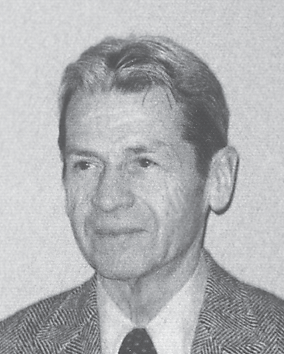
Portrait of Harold Hodge

Photo: Paul E. Morrow · CC BY-SA 2.5 · Wikimedia Commons

Nationality American — Toxicologie / Manhattan Project / expérimentation humaine / fluorures

Harold Hodge

Fiche documentée couvrant 6 controverses, dont « 1943-1945 : direction de la toxicologie du Manhattan Project et recherches classifiées sur uranium, fluorures et dispersion radioactive » et « 1945-1947 : implication rapportée dans la planification du programme d'injections de plutonium sur des patients ».

Are you concerned? Right of reply

Profile No. 2087 · Updated on 12 October 2026

Portrait of Harold Hodge

Photo: Paul E. Morrow · CC BY-SA 2.5 · Wikimedia Commons

6Documented controversies
7Sources
0Formal charge · all time
0Conviction

I. Documented controversies

01

années 1940–1960

Années 1940-1960 : promotion de la fluoration de l'eau parallèlement à ses fonctions de toxicologue nucléaire

No legal proceedings

Hodge devient une figure majeure de la recherche sur les fluorures et un défenseur de la fluoration de l'eau, notamment à partir des données des premières études communautaires. Son double parcours — toxicologie des fluorures dans le programme atomique puis promotion de la fluoration — est ensuite devenu un point récurrent des controverses publiques autour de cette politique sanitaire.

State of the evidence
Documented
Attribution
Personally implicated

Sources · 2

  1. [1]
    University of Rochester Medical CenterToxicology at the University of RochesterOfficial documentHigh reliability
  2. [2]
    PMC / International Journal of Environmental Research and Public HealthFluoride: From Nutrient to Suspected NeurotoxinAcademic publicationHigh reliability

Last verified: 14 September 2026

Add to this entry

02

1953–1957

1953-1957 : rôle rapporté dans la mise en relation ayant conduit aux injections d'uranium du « Boston Project »

No legal proceedings

Le Boston Project à Massachusetts General Hospital injecte de l'uranium à onze patients atteints de pathologies terminales pour étudier sa distribution et sa possible concentration dans des tumeurs cérébrales. Des récits historiques et un débat parlementaire irlandais attribuent à Hodge un rôle de facilitation entre William Sweet et le programme nucléaire.

State of the evidence
Documented

Sources · 2

  1. [1]
    U.S. Advisory Committee on Human Radiation Experiments / U.S. Government Printing OfficeAdvisory Committee on Human Radiation Experiments — Final ReportOfficial documentVery high reliability
  2. [2]
    Houses of the OireachtasDáil Éireann Debate — Fluoridation of Water Supplies (Repeal) Bill 2013Parliamentary recordMedium reliability

Last verified: 14 September 2026

Add to this entry

03

février–mars 1948

1948 : contestation par Hodge du classement de son chapitre sur l'uranium comme « expérimentation humaine »

No legal proceedings

Lors des discussions sur la déclassification des travaux médicaux du Manhattan Project, Hodge proteste contre la suppression de passages de son chapitre de toxicologie de l'uranium et soutient que celui-ci ne rapporte pas, selon lui, des expériences sur des humains. L'ACHRE replace cette correspondance dans une politique de classification également motivée par les risques de responsabilité et de relations publiques.

State of the evidence
Documented
Attribution
Directly implicated

Sources · 1

  1. [1]
    U.S. Advisory Committee on Human Radiation Experiments / U.S. Government Printing OfficeAdvisory Committee on Human Radiation Experiments — Final ReportOfficial documentVery high reliability

Last verified: 14 September 2026

Add to this entry

04

1945–1947

1945-1947 : implication rapportée dans la planification du programme d'injections de plutonium sur des patients

No legal proceedings

Des archives et le travail d'Eileen Welsome rattachent Hodge aux réunions de planification du programme Manhattan au cours duquel des patients ont reçu du plutonium à des fins de mesure biologique. L'enquête fédérale ultérieure a établi de graves déficits de consentement pour plusieurs sujets, notamment à Rochester.

State of the evidence
Documented
Attribution
Command responsibility

Sources · 2

  1. [1]
    U.S. Advisory Committee on Human Radiation Experiments / U.S. Government Printing OfficeAdvisory Committee on Human Radiation Experiments — Final ReportOfficial documentVery high reliability
  2. [2]
    Fluoride Action Network (reproducing excerpts from Eileen Welsome, The Plutonium Files)Harold Hodge, the University of Rochester, and Human Radiation ExperimentsBookMedium reliability

Last verified: 14 September 2026

Add to this entry

05

1946

1946 : injections d'uranium à six patients de Rochester pour déterminer un seuil de toxicité rénale

No legal proceedings

Dans le programme Manhattan de Rochester, six patients sont injectés avec du nitrate d'uranyle afin d'étudier l'excrétion et d'augmenter les doses jusqu'à détecter une atteinte rénale minimale. Le rapport ACHRE indique qu'aucun document retrouvé ne permet d'établir ce qui fut expliqué aux sujets et souligne le secret entourant l'étude. Hodge dirigeait la pharmacologie-toxicologie du programme de Rochester.

State of the evidence
Documented
Attribution
Institutional responsibility

Sources · 2

  1. [1]
    U.S. Advisory Committee on Human Radiation Experiments / U.S. Government Printing OfficeAdvisory Committee on Human Radiation Experiments — Final ReportOfficial documentVery high reliability
  2. [2]
    Society of ToxicologyIn Memoriam — Harold C. Hodge (1904-1990)High reliability

Last verified: 14 September 2026

Add to this entry

06

1943–1945

1943-1945 : direction de la toxicologie du Manhattan Project et recherches classifiées sur uranium, fluorures et dispersion radioactive

No legal proceedings

Hodge dirige la division de pharmacologie et toxicologie du Manhattan Project à Rochester. Le programme étudie notamment l'uranium, les fluorures et des scénarios de dispersion radioactive, dans un cadre militaire secret qui sera plus tard réexaminé à l'aune des normes d'éthique et de transparence de la recherche.

State of the evidence
Documented
Attribution
Direct responsibility

Sources · 2

  1. [1]
    Society of ToxicologyIn Memoriam — Harold C. Hodge (1904-1990)High reliability
  2. [2]
    U.S. Department of Energy — Office of Human Radiation ExperimentsThe Manhattan Project: A New and Secret World of Human ExperimentationOfficial documentVery high reliability

Last verified: 14 September 2026

Add to this entry

II. Constellation of documented links

No documented link with another published profile for now.

Two profiles are linked when a documented controversy of one names the other. The link points to that controversy and its sources; it does not indicate a personal relationship.

III. Has something changed?

A new court decision, a missing source, a mistake? Tell us what should be updated: every request is read by the editorial team.

iPhone and iPad

Install Controversia

  1. Tap Share
  2. then Add to Home Screen

Tap Share, then Add to Home Screen.