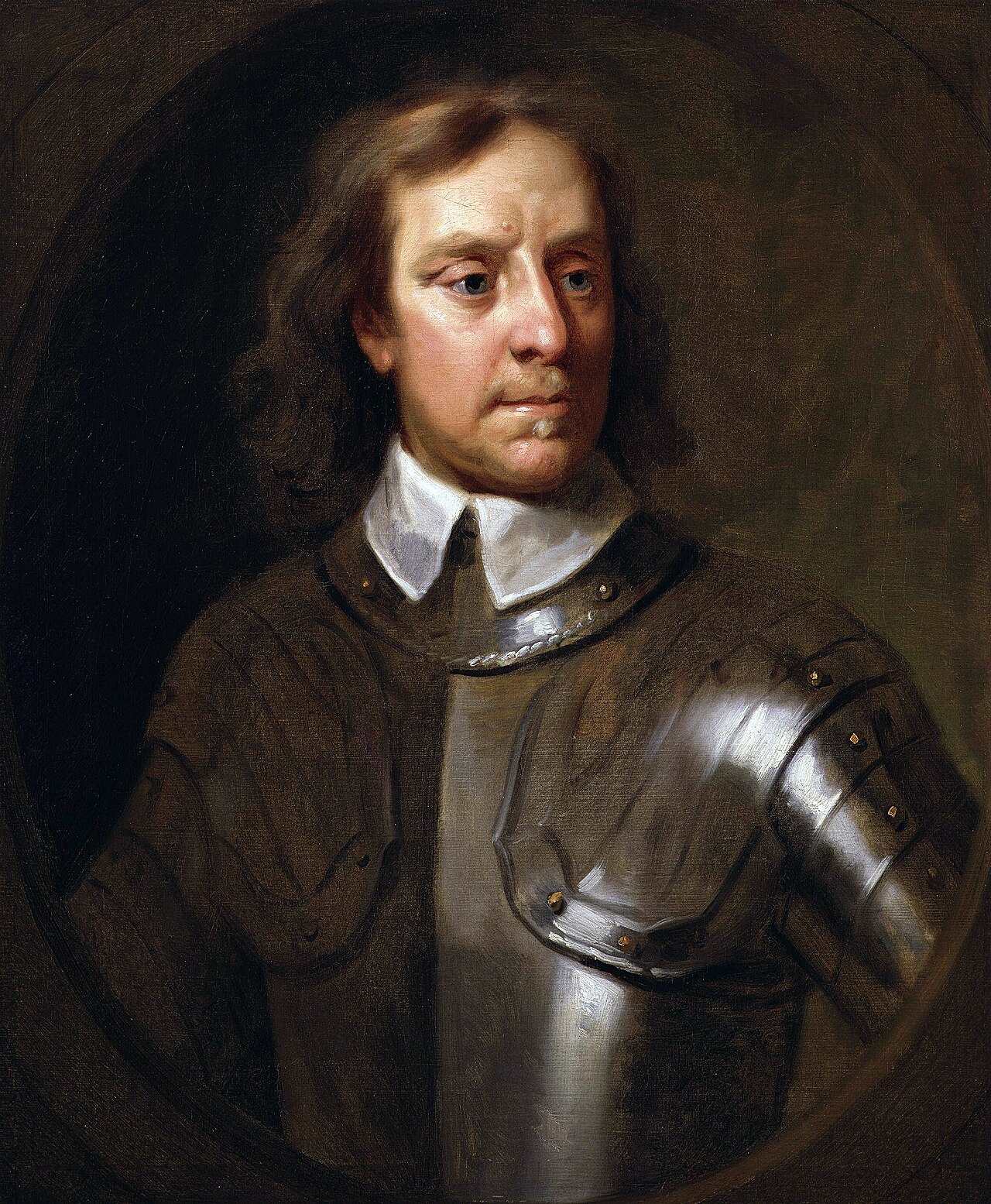
Portrait of Oliver Cromwell

Photo: After Samuel Cooper · Public domain

Born in United Kingdom · Nationality English — civil war / republic / Protectorate / conquest of Ireland / authoritarianism

Oliver Cromwell

Documented profile covering 8 controversies, including “1649: Signs death warrant for Charles I” and “September 1649: Capture of Drogheda and mass killing of defenders”.

Are you concerned? Right of reply

Profile No. 2129 · Updated on 12 October 2026

Portrait of Oliver Cromwell

Photo: After Samuel Cooper · Public domain

8Documented controversies+ 1 background event
9Sources
0Formal charge · all time
0Conviction

I. Documented controversies

01

1652–1659

1652–1650s: Confiscations and transplantation to Connacht associated with "Cromwellian settlement"

Civil / administrative proceedings

The land settlement following the conquest transfers large amounts of land from Catholic owners to soldiers, creditors and Protestant settlers and provides for the transplantation of Catholic landowners to Connacht.

State of the evidence
Documented
Attribution
Personally implicated

Sources · 1

  1. [1]
    Cambridge University PressOliver Cromwell and the 'Cromwellian' Settlement of IrelandAcademic publicationVery high reliability

Last verified: 14 September 2026

Add to this entry

02

22 January 1655–4 February 1658

1655 and 1658: Repeated dissolutions of Protectorate Parliaments amid opposition

Civil / administrative proceedings

Cromwell dissolves the first Protectorate Parliament in January 1655 after several months of conflict over executive powers. In 1658, he also dissolves the reconvened Parliament after less than two weeks of political confrontation.

State of the evidence
Documented
Attribution
Directly implicated

Sources · 1

  1. [1]
    UK ParliamentThe Protectorate ParliamentsParliamentary recordVery high reliability

Last verified: 14 September 2026

Add to this entry

03

1655–1657

1655–1657: Rule of the Major-Generals — regional military government and sanctions against former Royalists

Civil / administrative proceedings

Cromwell divides England into districts placed under Major-Generals responsible for law and order, religious moral reform and surveillance of former Royalists. Property is sequestered, and the regime is perceived as a form of military government.

State of the evidence
Documented
Attribution
Directly implicated

Sources · 1

  1. [1]
    The National ArchivesChristmas is cancelled! — Source 4ArchiveVery high reliability

Last verified: 14 September 2026

Add to this entry

04

1649–1653

1649–1653: Conquest of Ireland, wartime destruction and preparations for Protestant colonisation

No legal proceedings

The parliamentary conquest of Ireland leads to massacres, sieges, famine, displacement and a major transformation of land ownership. Wartime policies pave the way for the introduction of Protestant settlers and dispossession of a large proportion of Catholic landowners.

State of the evidence
Documented
Attribution
Directly implicated

Sources · 1

  1. [1]
    Cambridge University PressConquest and Land in IrelandAcademic publicationVery high reliability

Last verified: 14 September 2026

Add to this entry

05

20 April 1653

20 April 1653: Forced dissolution of Rump Parliament by soldiers

Civil / administrative proceedings

Frustrated by the Rump Parliament, Cromwell enters the House of Commons accompanied by an armed force and forcibly brings the assembly to an end.

State of the evidence
Documented
Attribution
Directly implicated

Sources · 1

  1. [1]
    UK ParliamentThe Rump dissolvedParliamentary recordVery high reliability

Last verified: 14 September 2026

Add to this entry

06

29–30 January 1649

1649: Signs death warrant for Charles I

No legal proceedings

Cromwell is among the signatories to the death warrant for Charles I, convicted by the High Court established by the Rump Parliament and executed on 30 January 1649.

Attribution
Directly implicated

Sources · 1

  1. [1]
    UK ParliamentDeath Warrant of King Charles IArchiveVery high reliability

Last verified: 14 September 2026

Add to this entry

07

3–11 September 1649

September 1649: Capture of Drogheda and mass killing of defenders

No legal proceedings

After the capture of Drogheda, Cromwell's forces kill a very large number of defenders. In his own letters, Cromwell estimates approximately 3,000 people were put to death and presents the operation as divine judgment and a measure intended to discourage resistance.

State of the evidence
Documented
Attribution
Directly implicated

Sources · 1

  1. [1]
    History IrelandThe Letters, Writings, and Speeches of Oliver CromwellSecondary sourceHigh reliability

Last verified: 14 September 2026

Add to this entry

08

11 October 1649

October 1649: Sack of Wexford and approximately 2,000 deaths reported by Cromwell

No legal proceedings

During the capture of Wexford, parliamentary troops kill or drown large numbers of soldiers and inhabitants. Cromwell himself reports that approximately 2,000 people were killed or drowned and describes the outcome as divine justice.

State of the evidence
Documented
Attribution
Command responsibility

Sources · 1

  1. [1]
    Cambridge University PressConquest and land in Cromwellian Ireland, 1649–1652Academic publicationVery high reliability

Last verified: 14 September 2026

Add to this entry

II. Documented background

Documented biographical or institutional milestones (elections, appointments, foundings, acquisitions…). These are not controversies and are not counted as such.

  1. July–December 1653

    1653: Rump replaced by appointed assembly and establishment of Protectorate

    After dissolving the Rump, Cromwell establishes an assembly of selected rather than elected members, known as Barebone's Parliament. Following its dissolution, the Instrument of Government makes Cromwell Lord Protector.

    Sources · 1
    1. Cambridge University Press — The Political Thought of the English Free State, 1649–1653 — Epilogue

III. Constellation of documented links

No documented link with another published profile for now.

Two profiles are linked when a documented controversy of one names the other. The link points to that controversy and its sources; it does not indicate a personal relationship.

IV. Has something changed?

A new court decision, a missing source, a mistake? Tell us what should be updated: every request is read by the editorial team.

Support the archive

Controversia checks and updates its profiles independently. Support is optional and has no effect on the content of profiles.

Donate

iPhone and iPad

Install Controversia

  1. Tap Share
  2. then Add to Home Screen

Tap Share, then Add to Home Screen.