Born in Rwanda · Nationality Rwandan — Politics / military / presidency / regional conflicts / human rights / opposition

Paul Kagame

Documented profile covering 17 controversies, including “1994: Serious crimes by RPF forces during campaign ending genocide — command responsibility debated” and “1995: Kibeho massacre by Rwandan Patriotic Army under government in which Kagame was Vice-President and Defence Minister”.

Are you concerned? Right of reply

Profile No. 1831 · Updated on 12 October 2026

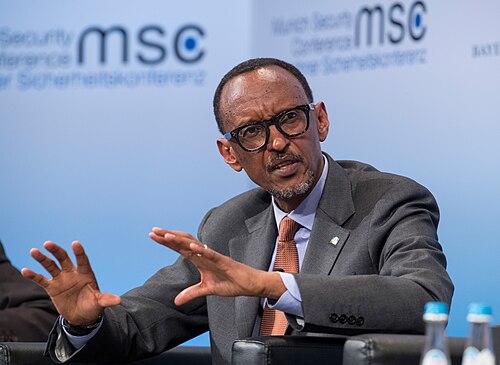
Portrait of Paul Kagame

Photo: Wikimedia Commons

17Documented controversies+ 1 background event
21Sources
0Formal charge · all time
0Conviction

I. Documented controversies

01

January 2025–September 2026

2025–2026: M23 offensive, capture of major cities and US sanctions against Rwandan army for alleged support

Civil / administrative proceedings

Following the M23 offensive that captured Goma and other territories in 2025, the United States sanctioned the Rwanda Defence Force and senior military officials in March 2026, stating that the movement's gains would not have been possible without Rwandan support. A US-backed peace agreement provided for the withdrawal of Rwandan forces alongside the dismantling of the FDLR.

Attribution
Political responsibility

Last verified: 13 September 2026

Add to this entry

02

June 2025–2026

2025–2026: Victoire Ingabire rearrested and prosecuted for incitement and organising activities deemed subversive

Protagonist not prosecuted

Protagonist not prosecuted — these proceedings are not counted in their formal charges or convictions.

Victoire Ingabire was arrested again in 2025 and prosecuted for offences relating in particular to incitement and organising activities considered to target the authorities. Human rights organisations condemned arbitrary detention and a renewed use of the justice system against an opposition figure.

State of the evidence
Allegations
Role of the person profiled
Protagonist not prosecuted

Last verified: 13 September 2026

Add to this entry

03

2017–2024

2017–2024: Disappearances, suspicious deaths and prosecutions of critics — enduring climate of political repression

Civil / administrative proceedings

Over several years, Human Rights Watch documented arrests, disappearances, suspicious deaths and restrictions targeting opponents, journalists and activists. Ahead of the 2024 elections, the organisation considered that this climate had severely reduced the ability of an independent opposition to operate.

State of the evidence
Documented
Attribution
Political responsibility

Sources · 2

  1. [1]
    Human Rights WatchRwanda: Respect Rights During ElectionsNGO reportHigh reliability
  2. [2]
    Human Rights WatchWorld Report 2025: RwandaNGO reportHigh reliability

Last verified: 13 September 2026

Add to this entry

04

2022–2024

2022–2024: Rwandan support for M23 in DRC documented by international experts, consistently denied by Kigali

Allegations

UN experts and international investigations attributed material, operational and military support for M23 in eastern DRC to Rwanda, as well as the direct presence of Rwandan soldiers. The movement captured extensive territory and was accused of serious abuses.

Attribution
Political responsibility

Sources · 1

  1. [1]
    Human Rights WatchWorld Report 2025: RwandaNGO reportHigh reliability

Last verified: 13 September 2026

Add to this entry

05

August 2020–March 2023

2020–2023: Paul Rusesabagina's arrest, controversial transfer and conviction — detention deemed arbitrary by UN working group

Conviction — against Paul Rusesabagina

Protagonist not prosecuted — these proceedings are not counted in their formal charges or convictions.

Paul Rusesabagina, a critic of Kagame and a figure associated with the film Hotel Rwanda, was lured onto a private flight and subsequently arrested in Rwanda. He was sentenced in 2021 to 25 years in prison in a terrorism case; the UN Working Group on Arbitrary Detention considered his deprivation of liberty arbitrary and criticised the circumstances of his transfer and trial.

State of the evidence
Established by a court
Attribution
Political responsibility
Person targeted by the proceedings
Paul Rusesabagina
Role of the person profiled
Protagonist not prosecuted

Sources · 2

  1. [1]
    UN Working Group on Arbitrary DetentionOpinion No. 81/2021 concerning Paul Rusesabagina (Rwanda)Official documentVery high reliability
  2. [2]

Last verified: 13 September 2026

Add to this entry

06

2019–2021

2019–2021: Pegasus — phones of opposition figures and critics' relatives targeted or infected, Rwanda implicated and denies allegations

No legal proceedings

The Pegasus Project and Amnesty International identified Rwandan numbers and relatives of opposition figures among potential targets and documented the infection of the phone belonging to Carine Kanimba, Paul Rusesabagina's daughter. Media investigations identified Rwanda as a potential client.

State of the evidence
Allegations

Sources · 1

  1. [1]
    Amnesty InternationalRwanda: Evidence of Pegasus spyware attacks on political activistsNGO reportHigh reliability

Last verified: 13 September 2026

Add to this entry

07

July 2017–December 2018

2017–2018: Diane Rwigara barred from presidential election, imprisoned then acquitted of insurrection and forgery charges

Acquitted / conviction overturned — against Diane Rwigara

Protagonist not prosecuted — these proceedings are not counted in their formal charges or convictions.

Diane Rwigara was prevented from standing in the 2017 presidential election after some of her signatures were invalidated, then arrested alongside members of her family and prosecuted for offences including incitement to insurrection and forgery. She was acquitted in December 2018.

Legal status — source text
Acquitted / conviction overturned
Person targeted by the proceedings
Diane Rwigara
Role of the person profiled
Protagonist not prosecuted

Sources · 2

  1. [1]
    Human Rights WatchWorld Report 2019: RwandaNGO reportHigh reliability
  2. [2]

Last verified: 13 September 2026

Add to this entry

08

February–May 2018

2018: Rwandan police kill at least 12 Congolese refugees during protests in Kiziba and Karongi

No legal proceedings

Police used live ammunition during demonstrations by Congolese refugees protesting against reductions in food rations. Human Rights Watch documented at least 12 deaths, while the authorities reported a lower death toll and maintained that force had been used in response to violence by protesters.

State of the evidence
Documented
Attribution
Political responsibility

Sources · 2

  1. [1]
    Human Rights WatchRwanda: A Year On, No Justice for Refugee KillingsNGO reportHigh reliability
  2. [2]
    Human Rights WatchWorld Report 2019: RwandaNGO reportHigh reliability

Last verified: 13 September 2026

Add to this entry

09

2015–2017

2015: Constitutional reform allows Kagame to remain in power beyond original term limit

No legal proceedings

A constitutional reform approved by referendum in 2015 changed presidential term limits and allowed Kagame to stand again in 2017 and potentially remain in power well beyond the deadline provided for under the previous Constitution.

State of the evidence
Documented
Attribution
Political responsibility

Sources · 1

  1. [1]

Last verified: 13 September 2026

Add to this entry

10

2010–March 2014

2010–2014: Attacks against Kayumba Nyamwasa in South Africa and expulsion of Rwandan diplomats after raid

No legal proceedings

Former general Kayumba Nyamwasa, who had become an opposition figure, survived an assassination attempt in South Africa in 2010 and further incidents afterwards. Following a raid on his residence in 2014, Pretoria expelled Rwandan diplomats suspected of involvement, worsening a crisis between the two countries.

State of the evidence
Allegations

Sources · 2

  1. [1]
    Human Rights WatchRwanda: Repression Across BordersNGO reportHigh reliability
  2. [2]
    Al Jazeera / ReutersSouth Africa expels Rwandan diplomats after raidPressHigh reliability

Last verified: 13 September 2026

Add to this entry

11

January 2014

2014: Patrick Karegeya's murder in South Africa and Kagame's rhetoric about 'traitors'

No legal proceedings

Patrick Karegeya, a former Rwandan intelligence chief who had become an opposition figure, was found strangled in a Johannesburg hotel. Opposition figures accused Kigali; Kagame subsequently made remarks suggesting that those who betray their country suffer the consequences, fuelling the controversy.

Attribution
Political responsibility

Sources · 2

  1. [1]
  2. [2]
    Human Rights WatchRwanda: Repression Across BordersNGO reportHigh reliability

Last verified: 13 September 2026

Add to this entry

12

2010–2013

2010–2013: Prosecution of Victoire Ingabire following return to Rwanda and criticism of use of genocide-related laws

Conviction — against a third party

Protagonist not prosecuted — these proceedings are not counted in their formal charges or convictions.

Opposition figure Victoire Ingabire was arrested after returning to Rwanda in 2010 and subsequently convicted of offences relating in particular to conspiracy against the authorities and genocide ideology. Human rights organisations condemned her trial as politically motivated and marred by procedural problems.

State of the evidence
Established by a court
Role of the person profiled
Protagonist not prosecuted

Sources · 2

  1. [1]
    Human Rights WatchWorld Report 2011: RwandaNGO reportHigh reliability
  2. [2]
    Human Rights WatchWorld Report 2019: RwandaNGO reportHigh reliability

Last verified: 13 September 2026

Add to this entry

13

2010

2010: Wins presidential election with 93.8% after restrictions on opposition and media

No legal proceedings

Kagame won the 2010 presidential election with 93.8% of the vote in a context in which Human Rights Watch documented the absence of meaningful competition, restrictions on opposition parties and the media, and violence targeting critics.

State of the evidence
Documented
Attribution
Political responsibility

Sources · 1

  1. [1]
    Human Rights WatchWorld Report 2011: RwandaNGO reportHigh reliability

Last verified: 13 September 2026

Add to this entry

14

1998–2003

1998–2003: Continued Rwandan intervention in Democratic Republic of the Congo and controversy over exploitation of conflict

No legal proceedings

Rwanda again deployed forces in Congo during the Second Congo War, officially to fight armed Hutu groups responsible for the genocide and protect its security. The intervention was also associated with serious violations of humanitarian law and controversies over the exploitation of Congolese resources.

State of the evidence
Documented
Attribution
Political responsibility

Sources · 2

  1. [1]
    United Nations OHCHRDemocratic Republic of the Congo, 1993-2003: UN Mapping ReportOfficial documentVery high reliability
  2. [2]
    Human Rights WatchDR Congo: Q&A on the United Nations Human Rights Mapping ReportNGO reportHigh reliability

Last verified: 13 September 2026

Add to this entry

15

1996–1997

1996–1997: Rwandan intervention in Zaire and documented serious crimes against Hutu refugees and civilians

No legal proceedings

Rwanda, whose principal military and political leader was Kagame, participated in the invasion of Zaire in 1996. The UN Mapping Report documented extremely serious attacks against Hutu refugees and civilians, potentially constituting war crimes and crimes against humanity depending on the facts; it also indicated that certain elements could, if proven before a court, raise the question of genocide.

State of the evidence
Documented

Sources · 2

  1. [1]
    United Nations OHCHRDemocratic Republic of the Congo, 1993-2003: UN Mapping ReportOfficial documentVery high reliability
  2. [2]
    Human Rights WatchDR Congo: Q&A on the United Nations Human Rights Mapping ReportNGO reportHigh reliability

Last verified: 13 September 2026

Add to this entry

16

April 1995

1995: Kibeho massacre by Rwandan Patriotic Army under government in which Kagame was Vice-President and Defence Minister

No legal proceedings

During the dismantling of the Kibeho displaced persons camp in April 1995, soldiers of the Rwandan Patriotic Army opened fire and killed large numbers of people. Estimates of the death toll varied considerably; Human Rights Watch reported figures ranging from several hundred to approximately two thousand or more, depending on contemporary sources.

State of the evidence
Disputed

Sources · 1

  1. [1]
    Human Rights WatchWorld Report 1996: RwandaNGO reportHigh reliability

Last verified: 13 September 2026

Add to this entry

17

April–July 1994

1994: Serious crimes by RPF forces during campaign ending genocide — command responsibility debated

Allegations

The Rwandan Patriotic Front, led militarily by Paul Kagame, ended the 1994 genocide, but its own troops also committed massacres and executions of civilians. Human Rights Watch concluded that the abuses were sufficiently systematic and widespread that senior commanders should have known about them, and estimated that tens of thousands of civilians had been killed by the RPF, while emphasising that these crimes were neither of the same nature nor of the same scale as the genocide against the Tutsi.

State of the evidence
Documented

Sources · 1

  1. [1]
    Human Rights WatchThe Rwandan Patriotic Front — Leave None to Tell the StoryNGO reportHigh reliability

Last verified: 13 September 2026

Add to this entry

II. Documented background

Documented biographical or institutional milestones (elections, appointments, foundings, acquisitions…). These are not controversies and are not counted as such.

  1. July 2024

    2024: Fourth term won with more than 99% of vote after exclusion of several candidates

    Kagame won the 2024 presidential election with approximately 99% of the vote. Several candidates were excluded, and leading opposition figures had been prevented from standing, prosecuted or marginalised in preceding years, leading NGOs to consider competition extremely limited.

    Sources · 2
    1. Human Rights Watch — Rwanda: Respect Rights During Elections
    2. Human Rights Watch — World Report 2025: Rwanda

III. Constellation of documented links

  • Linked profile (portrait or initials) — click to open it
  • Line width: number of documented references
  • Hover over or tap a line: controversies and sources

Two profiles are linked when a documented controversy of one names the other. The link points to that controversy and its sources; it does not indicate a personal relationship.

List of documented links (1)
  1. Gims1 documented reference

IV. Has something changed?

A new court decision, a missing source, a mistake? Tell us what should be updated: every request is read by the editorial team.

iPhone and iPad

Install Controversia

  1. Tap Share
  2. then Add to Home Screen

Tap Share, then Add to Home Screen.