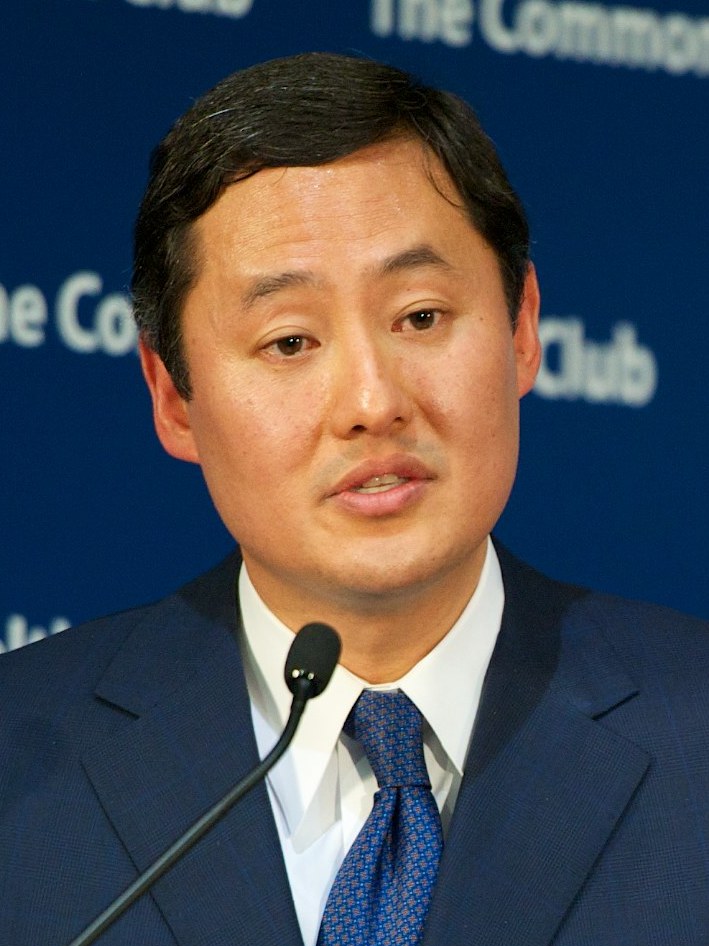
Portrait of John Yoo

Photo: Commonwealth Club from San Francisco, San Jose, United States · CC BY 2.0 · Wikimedia Commons

Born in South Korea · Nationality American — Science / health / intellectuals + Law / institutions

John Yoo

Documented profile covering 9 controversies, including “25 September 2001 memo: exceptionally broad interpretation of presidential war powers after 9/11” and “Use of military force within the United States: 2001 opinion subsequently disavowed by OLC”.

Are you concerned? Right of reply

Profile No. 1173 · Updated on 12 October 2026

Portrait of John Yoo

Photo: Commonwealth Club from San Francisco, San Jose, United States · CC BY 2.0 · Wikimedia Commons

9Documented controversies
15Sources
0Formal charge · all time
0Conviction

I. Documented controversies

01

2020

DACA and Donald Trump: expanded executive power theory adopted by White House

No legal proceedings

Following the Supreme Court decision preventing the immediate repeal of DACA, Yoo argued that it could paradoxically allow a president to create unilateral policies that were very difficult to remove quickly, even when based on a questionable interpretation of executive authority. Donald Trump and his advisers took an interest in this theory, and Yoo discussed it with the President and White House officials.

State of the evidence
Documented
Attribution
Close aide

Sources · 2

  1. [1]
    Associated Press / The Washington PostWhite House seeks advice of ‘torture memos’ author on powersMediaHigh reliability
  2. [2]

Last verified: 7 September 2026

Add to this entry

02

2008–2012

José Padilla versus John Yoo: civil action dismissed on appeal under qualified immunity

Civil / administrative proceedings

José Padilla, an American citizen detained as an 'enemy combatant', sued Yoo, claiming that his legal opinions had contributed to his detention and treatment that he characterised as torture. In 2012, the Ninth Circuit Court of Appeals dismissed the claims against Yoo on qualified immunity grounds.

State of the evidence
Documented
Attribution
Accused

Sources · 2

  1. [1]
    U.S. Court of Appeals for the Ninth CircuitPadilla v. Yoo — Ninth Circuit opinionCourt decisionVery high reliability
  2. [2]
    SCOTUSblogJohn Yoo granted legal immunityPressHigh reliability

Last verified: 7 September 2026

Add to this entry

03

2004–2010

DOJ ethics investigation into interrogation memos: final finding of 'poor judgment'

Investigation

The DOJ's Office of Professional Responsibility investigated Yoo and Jay Bybee's conduct in drafting the interrogation memoranda over several years. The OPR had concluded that professional misconduct had occurred, but senior career official David Margolis rejected that disciplinary classification and concluded that the authors had exercised 'poor judgment', conduct markedly different from what the Department expected of a lawyer exercising sound judgement.

Sources · 1

  1. [1]
    U.S. Department of JusticeActing Deputy Attorney General Gary G. Grindler on the OPR Investigation into OLC MemorandaOfficial statementVery high reliability

Last verified: 7 September 2026

Add to this entry

04

2001–2008

Use of military force within the United States: 2001 opinion subsequently disavowed by OLC

No legal proceedings

In a memo dated 23 October 2001, Yoo and Robert Delahunty argued for very broad presidential powers to use military force against terrorist activities on American territory, with analyses minimising the ordinary application of constitutional protections in certain circumstances. In 2008, the OLC formally warned that several propositions in the memo should no longer be regarded as authoritative.

State of the evidence
Documented
Attribution
Directly implicated

Sources · 2

  1. [1]
    U.S. Department of Justice — Office of Legal CounselOctober 23, 2001 OLC Opinion Addressing the Domestic Use of Military Force to Combat Terrorist ActivitiesOfficial documentVery high reliability
  2. [2]
    U.S. Department of Justice — Office of Legal CounselOLC FOIA Electronic Reading RoomArchiveVery high reliability

Last verified: 7 September 2026

Add to this entry

05

2003–2005

14 March 2003 military memo: claim that Congress could not regulate certain interrogations

No legal proceedings

In a secret memorandum to the Department of Defense dated 14 March 2003, Yoo argued that several federal criminal laws should not be interpreted as restricting the interrogation of enemy combatants where they encroached on the President's prerogatives as Commander-in-Chief. The document expressed an exceptionally broad interpretation of executive power.

Attribution
Directly implicated

Sources · 3

  1. [1]
    U.S. Department of Justice — Office of Legal CounselOLC FOIA Electronic Reading Room — Military Interrogation of Alien Unlawful Combatants Held Outside the United StatesArchiveVery high reliability
  2. [2]
    U.S. Department of Justice — Office of Legal CounselLetter regarding withdrawal of John Yoo's March 14, 2003 memorandumOfficial documentVery high reliability
  3. [3]
    U.S. Department of Justice — Office of Legal CounselStatus of Certain OLC Opinions Issued in the Aftermath of the Terrorist Attacks of September 11, 2001Official documentVery high reliability

Last verified: 7 September 2026

Add to this entry

06

2001–2004

Warrantless surveillance programme: Yoo initially sole cleared OLC lawyer, analysis considered at least factually flawed

No legal proceedings

Yoo drafted the first series of legal memoranda supporting the President's Surveillance Program, which authorised forms of electronic surveillance after 9/11 outside the ordinary FISA framework. The joint inspectors general report noted that it was extraordinary and inappropriate for only one OLC lawyer to be responsible for the initial analysis and found that restrictions on access had contributed to a legal analysis that was, at a minimum, factually flawed.

State of the evidence
Documented
Attribution
Directly implicated

Sources · 2

  1. [1]
    U.S. Department of Justice — Office of the Inspector GeneralReport on the President's Surveillance ProgramOfficial documentVery high reliability
  2. [2]
    U.S. Department of Justice — Office of the Inspector GeneralReport on the President’s Surveillance Program — Volume IOfficial documentVery high reliability

Last verified: 7 September 2026

Add to this entry

07

2001–2003

Geneva Conventions: opinions allowing prisoner-of-war status to be denied to Al-Qaeda and Taliban detainees

No legal proceedings

Yoo participated in a series of OLC opinions on the application of the Geneva Conventions to people captured in Afghanistan. These analyses contributed to a legal framework in which Al-Qaeda was regarded as falling outside prisoner-of-war status and the Taliban as not meeting the conditions for that status. This legal framework was strongly challenged by legal scholars, military personnel and human rights advocates.

State of the evidence
Documented
Attribution
Close aide

Sources · 2

  1. [1]
    U.S. Department of Justice — Office of Legal CounselOLC FOIA Electronic Reading Room — Treaties and Laws Applicable to the Conflict in AfghanistanArchiveVery high reliability
  2. [2]
    U.S. Department of Justice — Office of Legal CounselStatus of Taliban Forces Under Article 4 of the Third Geneva Convention of 1949Official documentVery high reliability

Last verified: 7 September 2026

Add to this entry

08

2002

1 August 2002 'torture memo': extremely restrictive definition of torture

No legal proceedings

Yoo played a central role in drafting the 1 August 2002 opinion addressed to Alberto Gonzales, commonly known as the 'torture memo'. The text adopted a highly restrictive definition of the physical or mental pain required to constitute torture and developed a theory under which the Commander-in-Chief's powers could limit the application of certain criminal prohibitions to wartime interrogation. The memo provided the legal basis for authorising enhanced interrogation techniques.

Attribution
Directly implicated

Sources · 2

  1. [1]
    U.S. Department of Justice — Office of Legal CounselMemorandum for Alberto R. Gonzales from John C. Yoo — August 1, 2002Official documentVery high reliability
  2. [2]
    U.S. Department of JusticeActing Deputy Attorney General Gary G. Grindler on the OPR Investigation into OLC MemorandaOfficial statementVery high reliability

Last verified: 7 September 2026

Add to this entry

09

2001-09

25 September 2001 memo: exceptionally broad interpretation of presidential war powers after 9/11

No legal proceedings

In an Office of Legal Counsel opinion signed on 25 September 2001, John Yoo defended an exceptionally broad interpretation of the President's constitutional authority to use military force against terrorists and states supporting them. The text notably asserted that presidential decisions concerning the threat, the amount of force and the form of response could not be limited by Congress and, under this interpretation, were essentially matters for the President.

State of the evidence
Documented
Attribution
Directly implicated

Sources · 2

  1. [1]
    U.S. Department of Justice — Office of Legal CounselThe President’s Constitutional Authority to Conduct Military Operations Against Terrorists and Nations Supporting ThemOfficial documentVery high reliability
  2. [2]
    U.S. Department of Justice — Office of Legal CounselOpinions of the Office of Legal Counsel in Volume 25 — Yoo opinionOfficial documentVery high reliability

Last verified: 7 September 2026

Add to this entry

II. Constellation of documented links

  • Linked profile (portrait or initials) — click to open it
  • Line width: number of documented references
  • Hover over or tap a line: controversies and sources

Two profiles are linked when a documented controversy of one names the other. The link points to that controversy and its sources; it does not indicate a personal relationship.

List of documented links (1)
  1. Donald Trump1 documented reference

III. Has something changed?

A new court decision, a missing source, a mistake? Tell us what should be updated: every request is read by the editorial team.

iPhone and iPad

Install Controversia

  1. Tap Share
  2. then Add to Home Screen

Tap Share, then Add to Home Screen.