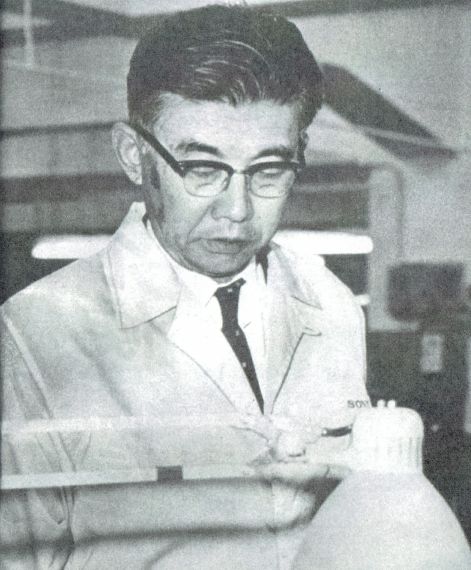
Portrait of Masaru Ibuka

Photo: 財界研究社、撮影者不明 · Public domain

Born in Japan · Nationality Japanese — Business / finance / technology

Masaru Ibuka

Documented profile covering 7 controversies, including “Work on "new military equipment" during the war before Sony was founded” and “Transistor project: MITI initially refuses, deeming Ibuka's gamble unrealistic for a small company”.

Are you concerned? Right of reply

Profile No. 0304 · Updated on 12 October 2026

Portrait of Masaru Ibuka

Photo: 財界研究社、撮影者不明 · Public domain

7Documented controversies
14Sources
0Formal charge · all time
0Conviction

I. Documented controversies

01

1971–années 1980 et postérité

"Kindergarten Is Too Late": theory of the first three years and enduring early education controversy

No legal proceedings

Ibuka popularised in Japan and abroad the idea that the first years of life were critical to development and that parents could strongly stimulate language, music, reading and other abilities during that period. His book and an association he supported helped trigger a genuine early education boom, sometimes summarised deterministically as "three years old is already too late".

Legal status — source text
No legal proceedings

Sources · 3

  1. [1]
    Google Books / Simon & SchusterKindergarten Is Too Late!BookHigh reliability
  2. [2]
    Kogumakai Early Childhood Education Research Institute第一次幼児教育ブームと『幼稚園では遅すぎる』MediaMedium reliability
  3. [3]
    CiNii Research幼稚園では遅すぎる : 真の幼児教育とは何かAcademic publicationHigh reliability

Last verified: 22 August 2026

Add to this entry

02

1970–1980s

Japanese televisions in the United States: dumping and antitrust conspiracy allegations against Sony

Civil / administrative proceedings

Sony became involved in the major US controversy over dumping of Japanese televisions. The company participated in Japanese minimum export price arrangements and an exporters' association, elements invoked in antitrust proceedings. US measures had initially included Sony in a general finding of dumping.

State of the evidence
Customs and antitrust controversy documented; appellate record contains both links to industry arrangements and exculpatory Sony evidence
Legal status — source text
Sony was ultimately not shown by the cited appellate evidence to have sold at dumping prices; broader litigation against Japanese manufacturers continued.
Attribution
Corporate trade policy controversy during Ibuka's presidency; no finding of personal wrongdoing

Sources · 2

  1. [1]
    SonySony Annual Report 1970Regulatory filingHigh reliability
  2. [2]
    Justia / U.S. Court of AppealsIn Re Japanese Electronic Products Antitrust LitigationCourt decisionHigh reliability

Last verified: 22 August 2026

Add to this entry

03

1969

Gulf & Western sues Sony in 1969 over Chromatron licence and Trinitron secrets

Civil / administrative proceedings

Gulf & Western, which had inherited Chromatron patents through Paramount, sued Sony in a US federal court, claiming that the company had breached a 1964 licensing agreement by refusing to provide technical information about Trinitron and its developments. The claimant sought access to technical records and possible damages.

State of the evidence
Contemporary trade press documents lawsuit and Sony's denial; subsequent archival review reports settlement
Attribution
Corporate litigation linked to Ibuka-led technology programme

Sources · 3

  1. [1]
    Television DigestGulf & Western sues Sony over TrinitronPressHigh reliability
  2. [2]
    Broadcasting MagazineG&W files suit to obtain Sony dataPressHigh reliability
  3. [3]
    Vision4 MagazineChromatron litigation summarySecondary sourceMedium reliability

Last verified: 22 August 2026

Add to this entry

04

1961–1966

Chromatron: Ibuka's technological gamble becomes financial drain before abandonment

No legal proceedings

Ibuka refused to adopt the dominant shadow-mask colour picture tube immediately and committed Sony to Chromatron. Despite years of development, the technology remained extremely difficult to manufacture: low yields, complex processes and relentlessly rising costs. Sony's official history states that the more the company tried to manufacture, the greater its losses became, to the point that Ibuka considered returning to shadow-mask technology.

State of the evidence
Sony archival account explicitly documents escalating costs and growing losses
Legal status — source text
No legal proceedings

Sources · 2

  1. [1]
    Sony GroupRoad to the TrinitronCompany documentHigh reliability
  2. [2]

Last verified: 22 August 2026

Add to this entry

05

1961-05

Sony's first major strike in 1961

No legal proceedings

Sony's rapid growth transformed its labour relations. In May 1961, on the company's fifteenth anniversary, the progressive faction of the trade union organised a strike. Sony's official history acknowledges that the episode forced Ibuka and Morita to confront the internal employment problems of a company that had become much larger.

State of the evidence
Sony's official history documents a strike by the progressive union faction
Legal status — source text
No legal proceedings

Sources · 1

  1. [1]
    Sony GroupVolume 1 Chapter 4 Expanding Overseas and Acquiring CapitalCompany documentHigh reliability

Last verified: 22 August 2026

Add to this entry

06

1953–1954

Transistor project: MITI initially refuses, deeming Ibuka's gamble unrealistic for a small company

Allegations

After deciding to purchase a transistor licence from Western Electric, Ibuka sought authorisation from Japan's Ministry of International Trade and Industry. MITI responded that a company still regarded as a small workshop had no realistic prospect of manufacturing such complex technology and considered his plan imprudent, while major Japanese groups entered the sector through more comprehensive technology transfers.

State of the evidence
Sony archival account documenting government resistance and subsequent authorisation

Sources · 1

  1. [1]
    Sony Group第1部 第3章 トランジスタラジオの開発Company documentHigh reliability

Last verified: 22 August 2026

Add to this entry

07

Seconde Guerre mondiale

Work on "new military equipment" during the war before Sony was founded

Allegations

In the founding prospectus written in 1946, Ibuka explained that at Japan Precision Instrument he had worked with several engineers to develop and manufacture "new military equipment". He also participated in a wartime research committee where he met Akio Morita, then a technical lieutenant representing the Navy.

State of the evidence
First-person founding prospectus and Sony history document wartime military-equipment research and development

Sources · 2

  1. [1]
    Sony GroupThe Founding ProspectusCompany documentHigh reliability
  2. [2]
    Sony GroupVolume 1 Chapter 1 Forming Tokyo Tsushin KogyoCompany documentHigh reliability

Last verified: 22 August 2026

Add to this entry

II. Constellation of documented links

  • Linked profile (portrait or initials) — click to open it
  • Line width: number of documented references
  • Hover over or tap a line: controversies and sources

Two profiles are linked when a documented controversy of one names the other. The link points to that controversy and its sources; it does not indicate a personal relationship.

List of documented links (1)
  1. Akio Morita2 documented references

III. Has something changed?

A new court decision, a missing source, a mistake? Tell us what should be updated: every request is read by the editorial team.

iPhone and iPad

Install Controversia

  1. Tap Share
  2. then Add to Home Screen

Tap Share, then Add to Home Screen.