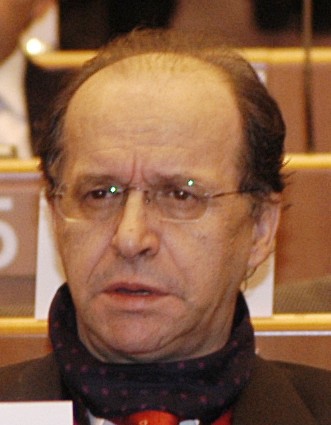
Portrait of Ibrahim Rugova

Photo: European People's Party · CC BY 2.0 · Wikimedia Commons

Born in Kosovo · Nationality Yugoslav — politics / regimes / war

Ibrahim Rugova

Documented profile covering 8 controversies, including “Creation of 'parallel state' and presidency resulting from elections not recognised by Belgrade” and “Rift with Bujar Bukoshi over government in exile and use of diaspora funds”.

Are you concerned? Right of reply

Profile No. 2376 · Updated on 12 October 2026

Portrait of Ibrahim Rugova

Photo: European People's Party · CC BY 2.0 · Wikimedia Commons

8Documented controversies
13Sources
0Formal charge · all time
0Conviction

I. Documented controversies

01

2004-12–2005-03

LDK–AAK coalition and appointment of Ramush Haradinaj as prime minister

Protagonist not prosecuted

Protagonist not prosecuted — these proceedings are not counted in their formal charges or convictions.

After the 2004 elections, Rugova and the LDK formed a coalition with the AAK, and Ramush Haradinaj became prime minister. The choice prompted strong opposition from the PDK and international scrutiny because of war-crimes investigations involving the former KLA commander. Haradinaj resigned in March 2005 following his ICTY indictment.

State of the evidence
Documented
Attribution
Directly implicated
Role of the person profiled
Protagonist not prosecuted

Sources · 2

  1. [1]
    The GuardianIbrahim RugovaObituaryHigh reliability
  2. [2]
    The GuardianKosovo PM quits after war crimes indictmentMediaHigh reliability

Last verified: 15 September 2026

Add to this entry

02

2004–2005-03-15

Two assassination attempts: Grenade at home followed by bomb targeting convoy

Protagonist is the victim

Protagonist is the victim — these proceedings are not counted in their formal charges or convictions.

Rugova survived at least two attacks: a grenade thrown at his residence and, in March 2005, a bomb detonated as his convoy passed through Pristina. He attributed the violence to elements seeking to destabilise Kosovo.

State of the evidence
Documented
Attribution
Protagonist is the victim
Role of the person profiled
Protagonist is the victim

Sources · 1

  1. [1]
    The Guardian / Associated PressKosovo's president survives assassination attemptMediaHigh reliability

Last verified: 15 September 2026

Add to this entry

03

1999-04–05; clarification 2002

Televised meetings with Milošević in 1999: Collaboration allegations followed by sworn testimony of coercion

No legal proceedings

During NATO bombing, Rugova, then under Serbian forces' control in Pristina, was shown on television with Slobodan Milošević and associated with statements calling for a political solution. KLA rivals accused him of collaboration. Before the ICTY in 2002, Rugova testified that he had been placed under house arrest, forced to attend the meetings, compelled to sign texts presented as agreements and used for propaganda.

State of the evidence
Documented
Attribution
Directly implicated

Sources · 3

  1. [1]
    International Criminal Tribunal for the former YugoslaviaIbrahim RugovaCourt recordVery high reliability
  2. [2]
    The GuardianKosovan leader paraded on TVPressHigh reliability
  3. [3]
    The GuardianLeader caught in a Milosevic trapPressHigh reliability

Last verified: 15 September 2026

Add to this entry

04

2001-12–2002-03

Institutional deadlock after 2001 elections before becoming president in 2002

No legal proceedings

Although the LDK finished first, Rugova repeatedly failed to obtain the parliamentary majority needed to become president, amid boycotts and rivalry with Thaçi's PDK and Haradinaj's AAK. The deadlock lasted several months before a power-sharing agreement and his election in March 2002.

State of the evidence
Documented
Attribution
Political responsibility

Sources · 2

  1. [1]
    The GuardianIbrahim RugovaObituaryHigh reliability
  2. [2]
    Radio Free Europe/Radio LibertyKosovar Parliament Off to Rocky StartPressHigh reliability

Last verified: 15 September 2026

Add to this entry

05

1999-07–08

Late return and criticism of passivity amid KLA political dominance after war

No legal proceedings

After his forced departure from Kosovo and stay in Italy, Rugova returned in July 1999 but was slow to participate fully in UN-backed provisional institutions. His own LDK officials and international actors criticised him as too passive while the KLA consolidated local influence. He eventually re-engaged more actively in politics.

State of the evidence
Documented
Attribution
Directly implicated

Sources · 2

  1. [1]
  2. [2]
    The GuardianClouded return for exiled Kosovo leaderPressHigh reliability

Last verified: 15 September 2026

Add to this entry

06

1995–1998

Rift with Bujar Bukoshi over government in exile and use of diaspora funds

No legal proceedings

From 1995, a deep rift developed between Rugova and Bujar Bukoshi, prime minister of the Kosovo government in exile, over administration of the parallel institutions and use of funds collected from the diaspora. The division led to interruptions in remittances and mutual allegations of political mismanagement.

State of the evidence
Documented
Attribution
Directly implicated

Sources · 2

  1. [1]
    International Crisis Group / RefworldICG Kosovo Spring ReportReportVery high reliability
  2. [2]
    Institute for War and Peace ReportingKosovo: More Trouble for RugovaPressHigh reliability

Last verified: 15 September 2026

Add to this entry

07

1998

Leadership criticised as 'aloof and autocratic', sole candidacy in 1998 and waning influence against KLA

No legal proceedings

The International Crisis Group described Rugova's leadership as often considered 'aloof and autocratic'. In the 1998 parallel presidential election, he was the only candidate while rivals boycotted the process. Meanwhile, the intensifying war and rise of the KLA led to departures from the LDK and growing criticism of his passive-resistance strategy.

State of the evidence
Documented
Attribution
Political responsibility

Sources · 2

  1. [1]
    International Crisis Group / RefworldWho's Who in KosovoReportVery high reliability
  2. [2]
    The GuardianThe patriotic gangster and a 10-year build-upMediaHigh reliability

Last verified: 15 September 2026

Add to this entry

08

1989–1992

Creation of 'parallel state' and presidency resulting from elections not recognised by Belgrade

No legal proceedings

Rugova founded the Democratic League of Kosovo (LDK) in 1989 and became the public face of a non-violent resistance strategy. Kosovo Albanians established parallel education, healthcare and government structures; in 1992, Rugova was elected president of this 'Republic of Kosovo', which was not recognised by Serbian authorities.

State of the evidence
Documented
Attribution
Directly implicated

Sources · 2

  1. [1]
    International Criminal Tribunal for the former YugoslaviaIbrahim RugovaCourt recordVery high reliability
  2. [2]
    The GuardianIbrahim RugovaObituaryHigh reliability

Last verified: 15 September 2026

Add to this entry

II. Constellation of documented links

  • Linked profile (portrait or initials) — click to open it
  • Line width: number of documented references
  • Hover over or tap a line: controversies and sources

Two profiles are linked when a documented controversy of one names the other. The link points to that controversy and its sources; it does not indicate a personal relationship.

List of documented links (3)
  1. Hashim Thaçi2 documented references
  2. Ramush Haradinaj1 documented reference
  3. Slobodan Milosevic1 documented reference

III. Has something changed?

A new court decision, a missing source, a mistake? Tell us what should be updated: every request is read by the editorial team.

Support the archive

Controversia checks and updates its profiles independently. Support is optional and has no effect on the content of profiles.

Donate

iPhone and iPad

Install Controversia

  1. Tap Share
  2. then Add to Home Screen

Tap Share, then Add to Home Screen.