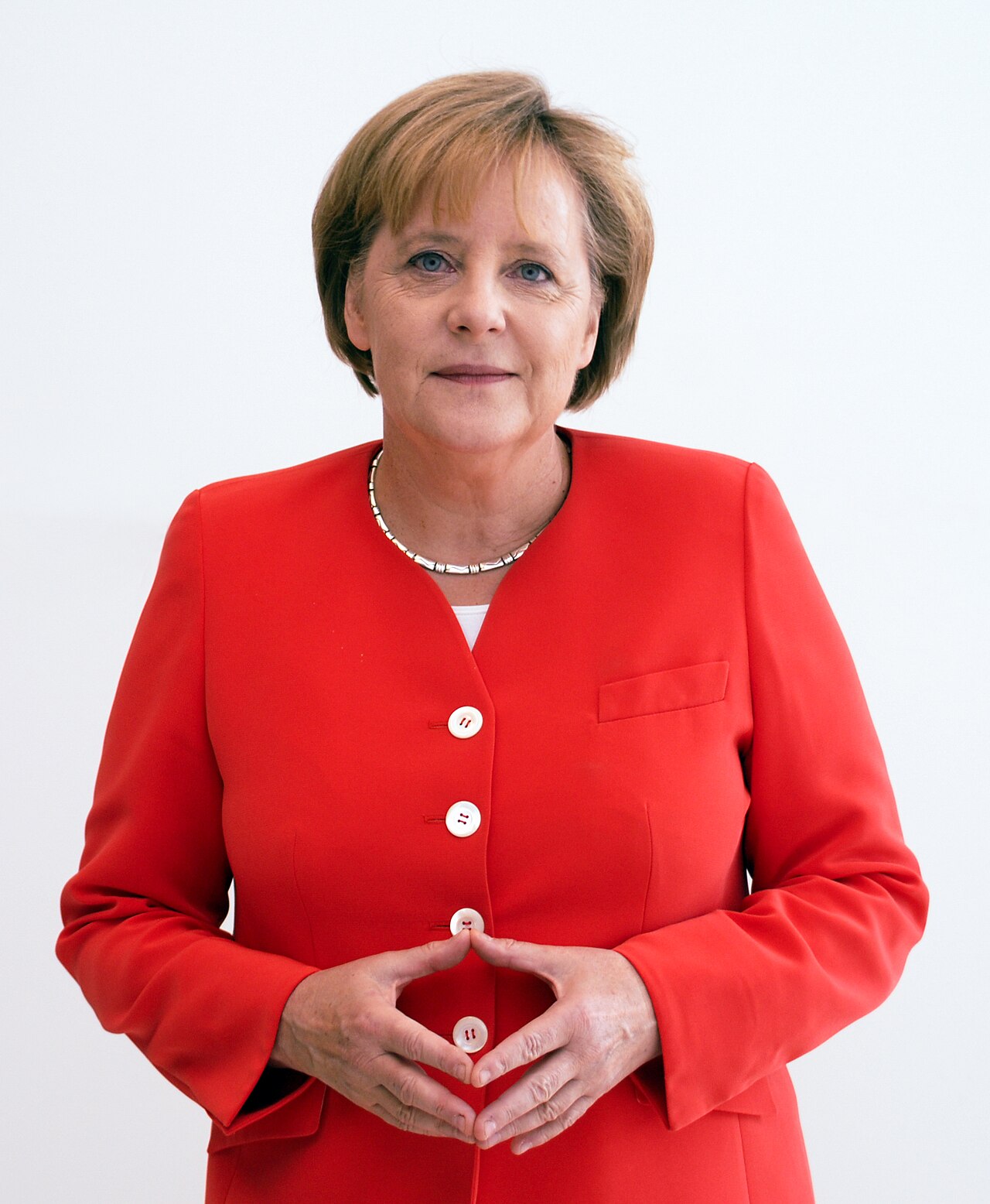
Portrait of Angela Merkel

Photo: Armin Linnartz · CC BY-SA 3.0 de · Wikimedia Commons

Born in Germany · Nationality German — Politics / CDU / Chancellorship / European Union / Economy / Migration / Energy / Geopolitics / Security / Public health

Angela Merkel

Documented profile covering 40 controversies, including “1970s–2026: East German past, FDJ role and recurring controversy over extent of involvement in GDR system” and “December 1999–2000: public break with Helmut Kohl during CDU slush fund scandal”.

Are you concerned? Right of reply

Profile No. 1407 · Updated on 12 October 2026

Portrait of Angela Merkel

Photo: Armin Linnartz · CC BY-SA 3.0 de · Wikimedia Commons

40Documented controversies
87Sources
0Formal charge · all time
0Conviction

I. Documented controversies

01

années 1970–26 March 2026

1970s–2026: East German past, FDJ role and recurring controversy over extent of involvement in GDR system

Civil / administrative proceedings

Angela Merkel grew up in East Germany, worked as a scientist and belonged to the FDJ, holding a position at the Academy of Sciences. Books and opponents have claimed that her political involvement was greater than she acknowledged, particularly concerning whether her portfolio was 'culture' or 'agitation and propaganda'. The question has long featured in accounts of her East German years.

State of the evidence
Disputed
Attribution
Directly implicated

Sources · 2

  1. [1]
    ReutersMerkel says has no secrets about her communist pastNews agencyVery high reliability
  2. [2]
    Verwaltungsgericht BerlinBundesarchiv muss Merkel-Unterlagen nicht herausgebenCourt recordVery high reliability

Last verified: 12 September 2026

Add to this entry

02

2010–10 March 2026

2010–2026: extension then accelerated nuclear phase-out after Fukushima and energy consequences

No legal proceedings

After extending nuclear plants' lifetimes in 2010, Merkel radically reversed course following Fukushima in 2011: eight reactors were shut down rapidly, with full phase-out scheduled for 2022. The decision, popular in the short term, was subsequently criticised for increasing reliance on coal and gas, complicating climate targets and reducing energy security margins. In 2026, Ursula von der Leyen retrospectively described Europe's reduction of nuclear power as a strategic mistake, renewing debate over Merkel's legacy.

State of the evidence
Documented
Attribution
Political responsibility

Sources · 3

  1. [1]
  2. [2]
  3. [3]

Last verified: 12 September 2026

Add to this entry

03

2022–21 April 2026

2022–2026: former Chancellor's office, staff costs, travel, hairdressing and make-up funded by state

No legal proceedings

After leaving office, Merkel retained a state-funded former Chancellor's office with several senior staff positions, a vehicle and security protection. Costs became a recurring political issue. In April 2026, the government reported, among other things, €64,677 in hairdressing and make-up expenses between July 2024 and March 2026 for Merkel, nine trips charged to the budget during that period and high staffing costs for former Chancellors' offices.

State of the evidence
Documented
Attribution
Directly implicated

Sources · 2

  1. [1]
    Deutscher BundestagKosten der Amtsausstattung früherer BundeskanzlerParliamentary recordVery high reliability
  2. [2]
    Deutscher BundestagDrucksache 21/5364Official documentVery high reliability

Last verified: 12 September 2026

Add to this entry

04

30–31 January 2025

January 2025: intervention against Friedrich Merz after CDU motion passes with AfD votes

No legal proceedings

Having retired from active politics, Merkel publicly criticised CDU leader Friedrich Merz after a Union migration motion passed with AfD votes. She accused him of breaking his commitment not to seek a majority with the far-right party and called on democratic parties to cooperate without the AfD. The former Chancellor's public intervention against her successor as party leader sparked a major internal controversy.

State of the evidence
Documented
Legal status — source text
Not applicable

Last verified: 12 September 2026

Add to this entry

05

April 2008–November 2024

April 2008–2024: opposition to NATO Membership Action Plan for Ukraine and Georgia

No legal proceedings

At the Bucharest summit, Merkel and France opposed immediately granting Ukraine and Georgia a NATO Membership Action Plan, despite US pressure. The compromise promised future membership without a timetable or MAP. Following the Russo-Georgian and Russo-Ukrainian wars, the decision was strongly reassessed as having left both states in a strategic grey area.

State of the evidence
Documented
Legal status — source text
Not applicable
Attribution
Directly implicated

Sources · 2

  1. [1]
    ReutersNATO's Ukraine debate still haunted by Bucharest pledgeNews agencyVery high reliability
  2. [2]

Last verified: 12 September 2026

Add to this entry

06

2009–26 November 2024

2009–2024: debt brake, 'Black Zero' policy and criticism of underinvestment

No legal proceedings

Merkel's first government helped enshrine the debt brake in Germany's Basic Law in 2009; subsequent governments then emphasised balanced budgets, particularly under Wolfgang Schäuble. Economists and local officials criticised the doctrine for restraining investment in infrastructure, digital technology and the energy transition. In 2024, Merkel herself favoured targeted relaxation to fund new needs.

State of the evidence
Documented
Attribution
Directly implicated

Sources · 3

  1. [1]
  2. [2]
    Deutsche BundesbankThe debt brake in Germany – key aspects and implementationOfficial documentVery high reliability
  3. [3]

Last verified: 12 September 2026

Add to this entry

07

2015–November 2024

2015–2024: Nord Stream 2 and dependence on Russian gas despite geopolitical warnings

No legal proceedings

After the annexation of Crimea, Merkel continued supporting Nord Stream 2 and for years presented it primarily as a commercial project. The United States, Ukraine, Poland and other countries warned that it would bypass Ukraine and increase Moscow's leverage. In 2021, approximately 55% of German gas imports came from Russia. After the 2022 invasion, the policy became one of the main criticisms of her legacy.

State of the evidence
Documented
Attribution
Political responsibility

Sources · 3

  1. [1]
  2. [2]
    ReutersMerkel: no regrets on energy policy with RussiaNews agencyVery high reliability
  3. [3]
    ReutersMerkel offers views on Putin, Trump, Ukraine in memoirsNews agencyVery high reliability

Last verified: 12 September 2026

Add to this entry

08

April 2021–5 December 2024

2021–2024: fall of Kabul, delayed evacuation and parliamentary inquiry into Afghanistan withdrawal

No legal proceedings

The Taliban's seizure of Kabul in August 2021 caught Merkel's government and its allies by surprise. Berlin was accused of underestimating the speed of the collapse and delaying evacuation of local staff and people at risk. The Bundestag established an inquiry committee, before which Merkel testified in December 2024.

State of the evidence
Documented
Attribution
Shared responsibility

Sources · 3

  1. [1]
    ReutersGermany to help Afghans seeking to leave beyond Aug. 31News agencyVery high reliability
  2. [2]
    Federal Government of GermanyGovernment statement by Chancellor Merkel on AfghanistanOfficial documentVery high reliability
  3. [3]
    Deutscher Bundestag1st Committee of Inquiry (Afghanistan)Parliamentary recordVery high reliability

Last verified: 12 September 2026

Add to this entry

09

2014–December 2022

2014–2022: Minsk agreements, attempts to buy time against Moscow and controversy over 'time given' to Ukraine

No legal proceedings

Alongside François Hollande, Merkel played a central role in the Minsk agreements following the annexation of Crimea and outbreak of war in Donbas, while maintaining European sanctions against Russia. The agreements failed to produce a lasting settlement. In 2022, Merkel explained that they had also given Ukraine time to strengthen itself; Vladimir Putin used the remark to accuse Berlin and Paris of deceiving Moscow.

State of the evidence
Documented
Attribution
Shared responsibility

Last verified: 12 September 2026

Add to this entry

10

6 February 2020–15 June 2022

February 2020–June 2022: official remarks on Thuringia election found to breach AfD's equal political opportunities

No legal proceedings

After liberal Thomas Kemmerich was elected Minister-President of Thuringia with votes from the AfD, among others, Merkel declared from Pretoria that the result was 'unforgivable', had to be reversed and was a bad day for democracy. Her remarks were published on official government websites. In June 2022, the Constitutional Court ruled that Merkel had breached the AfD's right to equal opportunities in political competition by speaking in her official capacity and using government resources.

Attribution
Directly implicated

Last verified: 12 September 2026

Add to this entry

11

May 2020–6 December 2022

2020–2022: European recovery fund financed by common debt and German constitutional debate

Allegations

In May 2020, Merkel and Emmanuel Macron proposed a European recovery fund financed by EU borrowing, a major departure from Germany's traditional caution over debt mutualisation. The so-called 'frugal' countries and German litigants denounced a precedent towards a transfer union and inadequately controlled budgetary risks. The mechanism became NextGenerationEU.

State of the evidence
Documented
Attribution
Shared responsibility

Sources · 2

  1. [1]
  2. [2]
    Federal Constitutional Court of GermanyJudgment of 6 December 2022 - EU Own Resources DecisionCourt recordVery high reliability

Last verified: 12 September 2026

Add to this entry

12

September 2013–2021

2013–2021: reversal on motorway toll, scheme subsequently found discriminatory by Court of Justice of EU

Civil / administrative proceedings

During the 2013 campaign, Merkel rejected a motorway charge that would increase costs for German drivers, then accepted the CSU's coalition proposal for a toll offset for German-registered vehicles. The scheme became a lengthy political and legal fiasco: in 2019, the Court of Justice of the EU ruled that the combination of toll and tax relief created indirect discrimination based on nationality.

State of the evidence
Documented

Sources · 3

  1. [1]
    DIE ZEIT / Reuters / dpa / AFPMerkel revidiert Nein zur Pkw-MautNews agencyHigh reliability
  2. [2]
    EUR-Lex / Court of Justice of the European UnionAustria v Germany — road infrastructure chargeCourt recordVery high reliability
  3. [3]
    Deutscher BundestagEinschätzungen zu europa- und vergaberechtlichen Fragen der Pkw-MautParliamentary recordVery high reliability

Last verified: 12 September 2026

Add to this entry

13

2018–8 December 2021

2018–2021: refusal of automatic Huawei ban and controversy over technological dependence on China

Civil / administrative proceedings

Merkel resisted US pressure and demands from parts of the CDU to exclude Huawei from Germany's 5G network, preferring general security criteria to a ban naming a specific company. The United States threatened to restrict certain intelligence exchanges, and German intelligence officials also expressed reservations about the supplier's reliability. The controversy unfolded against growing commercial dependence on China.

State of the evidence
Documented
Attribution
Political responsibility

Sources · 3

  1. [1]
  2. [2]
  3. [3]
    Deutscher BundestagBundesregierung zu Huawei und 5G-SicherheitParliamentary recordVery high reliability

Last verified: 12 September 2026

Add to this entry

14

August 2019–June 2021

2019–2021: lobbying in China for Wirecard despite publicly available warnings

No legal proceedings

During a visit to China in September 2019, Merkel raised Wirecard's expansion plans with the authorities when critical articles about the company's accounting had already appeared. Wirecard collapsed less than a year later with €1.9 billion missing. A parliamentary inquiry subsequently criticised the Chancellery's naivety, particularly regarding lobbying by former minister Karl-Theodor zu Guttenberg.

State of the evidence
Documented

Sources · 2

  1. [1]
  2. [2]

Last verified: 12 September 2026

Add to this entry

15

2019–24 March 2021

2019–2021: climate law found partly incompatible with fundamental rights concerning period after 2030

Civil / administrative proceedings

Germany's 2019 Climate Protection Act, adopted under Merkel, set reduction targets but left the trajectory after 2030 largely undefined. In March 2021, the Federal Constitutional Court found the framework partly incompatible with fundamental rights because it potentially deferred an excessive share of the burden to future generations without adequately defining the post-2030 pathway.

State of the evidence
Documented

Sources · 2

  1. [1]
    Federal Constitutional Court of GermanyConstitutional complaints against the Federal Climate Change Act partially successfulCourt recordVery high reliability
  2. [2]
    Federal Constitutional Court of GermanyOrder of 24 March 2021 - 1 BvR 2656/18 et al.Court recordVery high reliability

Last verified: 12 September 2026

Add to this entry

16

December 2020–May 2021

2020–2021: Merkel pushes EU–China investment agreement despite geopolitical and human rights criticism

No legal proceedings

Under Germany's presidency of the EU Council, Merkel played a central role in reaching a last-minute political agreement on the Comprehensive Agreement on Investment with China in late December 2020. Experts and parliamentarians criticised the timing, allegedly inadequate concessions on forced labour and human rights, and the risk of prioritising German industrial interests. Following Chinese sanctions against Europeans, the European Parliament froze ratification in May 2021.

State of the evidence
Documented
Attribution
Shared responsibility

Sources · 2

  1. [1]
    European CouncilEU-China leaders' meeting via video conference, 30 December 2020Official documentVery high reliability
  2. [2]
    Center for Strategic and International StudiesThe Rise and Demise of the EU-China Investment AgreementHigh reliability

Last verified: 12 September 2026

Add to this entry

17

December 2020–January 2021

2020–2021: European Covid vaccine purchases criticised as too slow, Merkel defends common strategy

No legal proceedings

Early in the Covid vaccination campaign, Germany and the EU were strongly criticised for a slower rollout than Israel, the United Kingdom or the United States. Merkel defended joint European purchasing rather than national competition for doses and accepted that the more cautious procedure had taken longer. The controversy intensified when Germany also sought additional supplies.

State of the evidence
Documented
Attribution
Shared responsibility

Last verified: 12 September 2026

Add to this entry

18

22–24 March 2021

March 2021: Covid 'Easter rest' plan withdrawn within 48 hours and personal apology

No legal proceedings

After a lengthy meeting with the German states, Merkel announced enhanced 'Easter rest' arrangements involving wider shutdowns. Legal and practical problems immediately emerged, and the plan was abandoned less than two days later. Merkel personally accepted the mistake, apologised to the country and said the fault was entirely hers.

State of the evidence
Documented
Legal status — source text
Not applicable
Attribution
Political responsibility

Sources · 2

  1. [1]
    Federal Government of GermanyRede von Bundeskanzlerin Dr. Angela MerkelOfficial documentVery high reliability
  2. [2]
    Deutscher BundestagRegierungsbefragung mit Bundeskanzlerin MerkelParliamentary recordVery high reliability

Last verified: 12 September 2026

Add to this entry

19

March 2020–30 November 2021

2020–2021: lockdowns, curfews and federal emergency brake during pandemic

Civil / administrative proceedings

Merkel defended strong nationwide Covid restrictions and, in spring 2021, secured the federal emergency brake, automatically imposing certain limits on contacts, curfews and closures when infection incidence exceeded specified thresholds. Opponents criticised the duration and proportionality of the measures and centralisation at the expense of the states.

State of the evidence
Documented
Attribution
Shared responsibility

Sources · 2

  1. [1]
    Federal Constitutional Court of GermanyUnsuccessful constitutional complaints regarding curfews and contact restrictionsCourt recordVery high reliability
  2. [2]

Last verified: 12 September 2026

Add to this entry

20

October 2015–11 January 2019

2016–2019: EU–Turkey migration agreement and human rights criticism

No legal proceedings

Merkel played a leading role in the March 2016 EU–Turkey agreement providing for migrant returns from Greek islands, a mechanism to resettle Syrians and several billion euros to support refugees in Turkey. Arrivals along the Aegean route fell sharply, but the UN and NGOs warned of risks of collective returns and the EU's political dependence on Recep Tayyip Erdoğan.

State of the evidence
Documented
Attribution
Shared responsibility

Sources · 3

  1. [1]
    European CouncilEU-Turkey statement, 18 March 2016Official documentVery high reliability
  2. [2]
  3. [3]
    ReutersEU-Turkey migrant deal not working properly: MerkelNews agencyVery high reliability

Last verified: 12 September 2026

Add to this entry

21

April 2016–April 2019

2016–2019: Böhmermann–Erdoğan case, authorisation of prosecution and dispute over description of poem

Investigation

Following Jan Böhmermann's satirical poem targeting Recep Tayyip Erdoğan, Merkel authorised the opening of proceedings under former Section 103 of the Criminal Code, which required government approval to prosecute insults against a foreign head of state. The decision, taken when Berlin was politically dependent on Ankara over the migration agreement, drew strong criticism concerning freedom of expression. Merkel had also described the poem as deliberately offensive; Böhmermann subsequently sought to prevent her from repeating that assessment.

State of the evidence
Documented
Attribution
Political responsibility

Last verified: 12 September 2026

Add to this entry

22

4 September 2015–18 December 2018

September 2015–2018: admission of refugees stranded in Hungary, 'Wir schaffen das' and deep political polarisation

Civil / administrative proceedings

On 4–5 September 2015, Germany and Austria agreed to admit refugees and migrants stranded in Hungary. Merkel defended a reception policy summarised by 'Wir schaffen das', while more than one million arrivals were recorded at the time under the counting methods then in use. Reception capacity, the Cologne assaults, integration tensions and AfD's rise made the decision one of the central controversies of her tenure.

State of the evidence
Documented
Attribution
Shared responsibility

Sources · 3

  1. [1]
  2. [2]
  3. [3]

Last verified: 12 September 2026

Add to this entry

23

June–July 2018

June–July 2018: government crisis with Horst Seehofer over turning people back at border

No legal proceedings

Interior Minister and CSU leader Horst Seehofer wanted to unilaterally turn away certain asylum seekers at the border if they had already been registered elsewhere in Europe. Merkel refused unilateral national action without European coordination. The dispute became an existential crisis for the CDU/CSU alliance and government, with Seehofer threatening to resign from his offices and CSU leadership.

State of the evidence
Documented
Attribution
Political responsibility

Sources · 2

  1. [1]
  2. [2]
    Deutscher BundestagAktuelle Stunde zum Masterplan MigrationParliamentary recordVery high reliability

Last verified: 12 September 2026

Add to this entry

24

September 2018

September 2018: Maaßen crisis following Chemnitz and Merkel's apology over promotion compromise

No legal proceedings

Following far-right violence in Chemnitz, domestic intelligence chief Hans-Georg Maaßen publicly cast doubt on a video showing migrants being chased, contradicting Merkel. The coalition decided to remove him from the BfV but transfer him to a senior position at the Interior Ministry, immediately denounced as a promotion. Under pressure, the compromise was revised and Merkel apologised for misjudging the public impact of the decision.

State of the evidence
Documented
Attribution
Direct responsibility

Sources · 2

  1. [1]
  2. [2]

Last verified: 12 September 2026

Add to this entry

25

2013–16 February 2017

2013–2017: NSA/BND scandal, spying on allies and weak political oversight of intelligence

No legal proceedings

Following revelations that the NSA had monitored Merkel's telephone, a separate controversy showed that Germany's BND had cooperated with the US agency in selecting and monitoring European targets. Merkel, who had declared that 'spying among friends' was unacceptable, defended general cooperation with the NSA in 2015, then acknowledged before the inquiry committee in 2017 that she had previously been unaware of the operation's scale.

State of the evidence
Documented

Sources · 3

  1. [1]
    ReutersMerkel defends German intelligence cooperation with NSANews agencyVery high reliability
  2. [2]
  3. [3]
    ReutersNSA also spied on several German ministersNews agencyVery high reliability

Last verified: 12 September 2026

Add to this entry

26

September 2015–March 2017

2015–2017: Dieselgate, Berlin's proximity to automotive industry and shortcomings in emissions oversight

No legal proceedings

Volkswagen acknowledged using software to circumvent emissions tests. Merkel told an inquiry committee that she had learned of the fraud through the press. The scandal nevertheless exposed close ties between the German state and the automotive industry and weaknesses in oversight, although discrepancies between laboratory and real-world emissions had been known for years.

State of the evidence
Documented

Sources · 3

  1. [1]
  2. [2]
  3. [3]
    U.S. Environmental Protection AgencyLearn About Volkswagen ViolationsOfficial documentVery high reliability

Last verified: 12 September 2026

Add to this entry

27

26–30 June 2017

June 2017: allows vote on same-sex marriage but personally votes against

No legal proceedings

Merkel agreed that CDU/CSU MPs could vote according to conscience on same-sex marriage, enabling the legislation's rapid adoption, but personally voted against it. She explained that her conception of marriage remained a union between a man and a woman. The contrast between her procedural pragmatism and conservative vote prompted substantial controversy over LGBT rights.

State of the evidence
Documented
Attribution
Personally implicated

Sources · 2

  1. [1]
    ReutersGermany's Merkel voted against gay marriageNews agencyVery high reliability
  2. [2]

Last verified: 12 September 2026

Add to this entry

28

March 2010–August 2015

2010–2015: Greek crisis, austerity and confrontation over rescue packages

No legal proceedings

Merkel became the face of Germany's budgetary conditionality policy during the euro crisis. From 2010, her caution over assistance to Athens was accused of worsening financial pressures; subsequent programmes imposed painful reforms and cuts. In 2015, she ultimately supported a third programme of up to €86 billion and preferred Greece to remain in the euro rather than undergo a temporary Grexit.

State of the evidence
Documented
Attribution
Shared responsibility

Sources · 3

  1. [1]
    ReutersMerkel faces criticism for aggravating Greek woesNews agencyVery high reliability
  2. [2]
    ReutersMerkel defiant as austerity criticism mountsNews agencyVery high reliability
  3. [3]
    Council of the European UnionGreece: the third economic adjustment programmeOfficial documentVery high reliability

Last verified: 12 September 2026

Add to this entry

29

12 January–July 2015

January–July 2015: 'Islam belongs to Germany', break with PEGIDA and debate within Union parties

No legal proceedings

Amid the Paris terrorist attacks and rise of PEGIDA, Merkel adopted Christian Wulff's statement that 'Islam belongs to Germany'. She repeated it in July. The position triggered debate even within her own conservative camp over national identity, immigration and Islam's place in society.

State of the evidence
Documented
Legal status — source text
Not applicable
Attribution
Personally implicated

Sources · 2

  1. [1]
    Federal Government of GermanyIslam is part of Germany, says ChancellorOfficial documentVery high reliability
  2. [2]
    DIE ZEIT / Reuters / dpa / AFP"Der Islam gehört zu Deutschland"News agencyHigh reliability

Last verified: 12 September 2026

Add to this entry

30

15–17 July 2015

July 2015: televised exchange with young refugee Reem and criticism of lack of empathy

No legal proceedings

At a televised citizens' forum, a Palestinian teenager, Reem, told Merkel of her fear of deportation. The Chancellor replied that she could not promise every asylum seeker a right to stay, and the girl began crying; Merkel then approached to comfort her. The scene went viral and prompted accusations of coldness and insensitivity.

State of the evidence
Reported by the press
Legal status — source text
Not applicable
Attribution
Personally implicated

Sources · 2

  1. [1]
  2. [2]

Last verified: 12 September 2026

Add to this entry

31

19–20 June 2013

June 2013: 'Internet ist für uns alle Neuland' sparks widespread mockery of her digital outlook

No legal proceedings

During a press conference with Barack Obama, Merkel described the internet as 'Neuland' — still unfamiliar territory — in the context of tensions between security, law and digital freedoms. The phrase triggered widespread online mockery and became a symbol used by critics to denounce Germany's and its political class's digital backwardness.

State of the evidence
Documented
Legal status — source text
Not applicable
Attribution
Personally implicated

Sources · 2

  1. [1]
  2. [2]
    DIE ZEIT / dpaBundeskanzlerin Merkel: Im Internet NeulandNews agencyHigh reliability

Last verified: 12 September 2026

Add to this entry

32

4 September 2009–February 2011

2009–2011: Kunduz airstrike, civilian casualties and controversy over what Chancellery knew before election

No legal proceedings

An airstrike near Kunduz, ordered by a German officer against two hijacked fuel tankers, killed insurgents and civilians. The government was accused of delaying acknowledgement of the scale of civilian casualties; the Defence Minister at the time and the army chief subsequently left their posts. Press reports indicated that the Chancellery had received early warnings from the BND about numerous civilian casualties, raising questions about when Merkel became aware of the information before the federal election.

State of the evidence
Disputed

Last verified: 12 September 2026

Add to this entry

33

17–31 March 2011

March 2011: Germany abstains on UN resolution authorising intervention in Libya

No legal proceedings

Germany abstained on Security Council Resolution 1973 authorising use of force in Libya and declined to participate in operations, voting differently from the United States, France and the United Kingdom and alongside Russia and China in the group of abstainers. Merkel and Minister Guido Westerwelle's decision was criticised as an unusual distancing of Berlin from its principal Western allies.

State of the evidence
Documented
Attribution
Shared responsibility

Sources · 2

  1. [1]
  2. [2]
    ReutersWesterwelle under fire for Germany's Libya opt-outNews agencyVery high reliability

Last verified: 12 September 2026

Add to this entry

34

August–September 2010

2010: condemnation of Thilo Sarrazin's theories criticised because she had not read entire book

No legal proceedings

After publication of Thilo Sarrazin's book on immigration, Islam and demographics, Merkel described his theories as unhelpful and supported pressure for his departure from the Bundesbank. Opponents criticised her for judging too hastily a book she acknowledged not having read in full, making the episode a debate over the limits of political condemnation of provocative ideas.

State of the evidence
Documented
Legal status — source text
Not applicable
Attribution
Personally implicated

Sources · 2

  1. [1]
  2. [2]
    Der TagesspiegelSie hat Sarrazins Buch nicht gelesenPressHigh reliability

Last verified: 12 September 2026

Add to this entry

35

16–17 October 2010

October 2010: declaration that 'Multikulti' approach had 'utterly failed'

No legal proceedings

Addressing young CDU members, Merkel declared that the idea that people from different cultures could simply live alongside each other without any effort to integrate had 'utterly failed'. The phrase became one of the most discussed statements in her approach to immigration, identity and integration, variously interpreted as a realistic hardening of policy or an endorsement of assimilationist rhetoric.

State of the evidence
Documented
Legal status — source text
Not applicable
Attribution
Personally implicated

Sources · 1

  1. [1]

Last verified: 12 September 2026

Add to this entry

36

September 2008–2009

2008–2009: Hypo Real Estate rescue and political guarantee of deposits during financial crisis

No legal proceedings

At the height of the financial crisis, Merkel's government participated in the large-scale rescue of Hypo Real Estate and announced state guarantees for private deposits to prevent a banking panic. HRE was subsequently nationalised; the rescue involved substantial public guarantees and support, prompting debate over risks transferred to taxpayers and treatment of institutions considered 'too big to fail'.

State of the evidence
Documented
Attribution
Political responsibility

Sources · 2

  1. [1]
    DIE ZEIT / ReutersStreit um die Rettung von Hypo Real EstateNews agencyHigh reliability
  2. [2]
    Reuters / ZonebourseL'Etat allemand va garantir les dépôts bancaires privésNews agencyHigh reliability

Last verified: 12 September 2026

Add to this entry

37

May–November 2009

2009: political intervention supporting Magna in Opel restructuring

No legal proceedings

During General Motors' restructuring, Merkel and several German states publicly supported Magna/Sberbank's proposed takeover of Opel and linked bids to billions in public assistance and guarantees. Business leaders criticised the Chancellor for behaving almost like the seller of a private company and politicising the transaction.

State of the evidence
Documented
Attribution
Political responsibility

Sources · 1

  1. [1]
    Der Standard / Reuters"Das ist nicht Merkels Aufgabe"News agencyHigh reliability

Last verified: 12 September 2026

Add to this entry

38

August–September 2005

2005: selection of Paul Kirchhof and 'flat tax' controversy during federal campaign

No legal proceedings

As a candidate for Chancellor, Merkel brought former Constitutional Court judge Paul Kirchhof into her economic team. His radical tax simplification proposal, associated with a uniform rate of approximately 25%, conflicted with the Union's official manifesto and allowed the SPD to attack the CDU over tax fairness. The confusion was subsequently widely analysed as a campaign mistake contributing to the collapse of the conservatives' polling lead.

State of the evidence
Documented
Legal status — source text
Not applicable
Attribution
Directly implicated

Sources · 2

  1. [1]
    DeutschlandfunkWahlbaustein StaatsfinanzenBroadcastHigh reliability
  2. [2]
    Bundeszentrale für politische BildungBundestagswahlkampf und MedienberichterstattungOfficial documentVery high reliability

Last verified: 12 September 2026

Add to this entry

39

2002–March 2003

2002–2003: opposition to Schröder's stance against Iraq war and refusal to rule out force

No legal proceedings

As opposition leader, Merkel criticised Chancellor Gerhard Schröder for ruling out German participation in a war against Iraq in advance and defended the transatlantic relationship. In an opinion piece for the Washington Post, she argued that military force must remain a possible last resort, a deeply unpopular position in a Germany overwhelmingly opposed to the invasion.

State of the evidence
Documented
Legal status — source text
Not applicable
Attribution
Personally implicated

Sources · 2

  1. [1]
    The Washington PostSchroeder Doesn't Speak for All GermansPrimary sourceVery high reliability
  2. [2]
    The Washington PostGermany Stops Short of Saying 'I Told You So'PressHigh reliability

Last verified: 12 September 2026

Add to this entry

40

22 December 1999–2000

December 1999–2000: public break with Helmut Kohl during CDU slush fund scandal

No legal proceedings

As CDU Secretary-General and a former protégé of Helmut Kohl, Merkel published an opinion piece calling on her party to move beyond the former Chancellor following revelations of secret donations and undisclosed accounts. This highly risky stance within the CDU was seen as a decisive break with her mentor and contributed to her rise to party leadership in 2000.

State of the evidence
Documented
Legal status — source text
Not applicable
Attribution
Direct responsibility

Sources · 2

  1. [1]
    German History in Documents and ImagesThe Party Must Learn to WalkPrimary sourceHigh reliability
  2. [2]
    Federal Government of GermanyBiography - Angela MerkelOfficial documentVery high reliability

Last verified: 12 September 2026

Add to this entry

II. Constellation of documented links

  • Linked profile (portrait or initials) — click to open it
  • Line width: number of documented references
  • Hover over or tap a line: controversies and sources

Two profiles are linked when a documented controversy of one names the other. The link points to that controversy and its sources; it does not indicate a personal relationship.

List of documented links (16)
  1. Emmanuel Macron2 documented references
  2. Horst Seehofer2 documented references
  3. Jan Böhmermann2 documented references
  4. Recep Tayyip Erdoğan2 documented references
  5. Ursula von der Leyen2 documented references
  6. Barack Obama1 documented reference
  7. François Hollande1 documented reference
  8. Friedrich Merz1 documented reference
  9. General Motors1 documented reference
  10. Gerhard Schröder1 documented reference
  11. Jean-Luc Mélenchon1 documented reference
  12. Josef Ackermann1 documented reference
  13. Karl-Theodor zu Guttenberg1 documented reference
  14. Sahra Wagenknecht1 documented reference
  15. Werner Faymann1 documented reference
  16. Wolfgang Schäuble1 documented reference

III. Has something changed?

A new court decision, a missing source, a mistake? Tell us what should be updated: every request is read by the editorial team.

iPhone and iPad

Install Controversia

  1. Tap Share
  2. then Add to Home Screen

Tap Share, then Add to Home Screen.